

Keep Digging

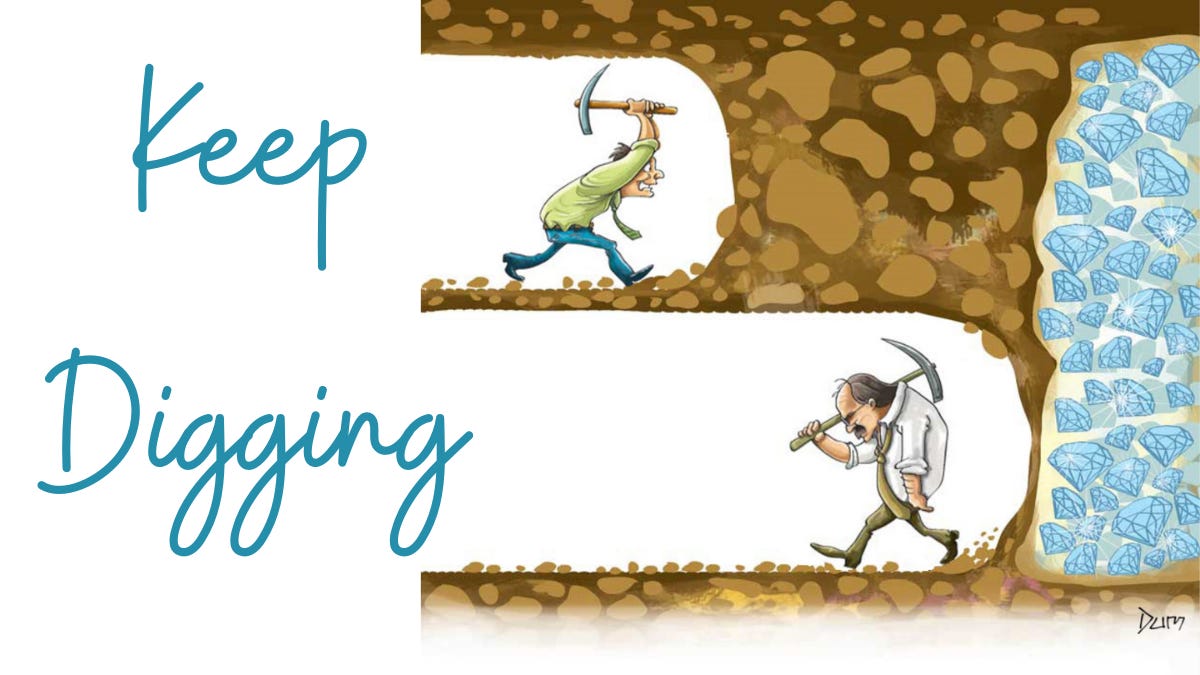
A lesson from our midweek service.
Genesis 26:18, “And Isaac digged again the wells of water which they had digged in the days of Abraham his father; for the Philistines had stopped them after the death of Abraham. And he called their names after the names by which his father had called them.”
It is the nature of the world we live in that things just don’t stay new. If you buy a new car, it has the smell, the shine, a windshield without a crack, and tires with the little skinny knobs that stick out the sides. You get a new pair of shoes, and they are slick on the bottom. They smell like leather. In time, they become rough and smell like something besides leather.
Things don’t stay new. Things have a tendency to corrode, to rust, to break down, to rot, and to experience all the things we see in every element of our life—including these corruptible bodies. I can’t see like I could at one time, and I probably don’t look as good as I did one time. But that is just the nature of this corruptible world.
In our opening text, we read that Isaac has come onto the scene and finds himself responsible for his life and the people around him. No doubt Isaac was given some wonderful blessings. He had a father who was the friend of God. He had a father who had a covenant with God. And no doubt he had many privileges.
But it doesn’t matter how many privileges you have received. It doesn’t matter how many blessings of the previous generation you have been blessed to experience. Every one of us will find that the Philistines will clog up the wells of the things you have received. It doesn’t matter how deep it is dug or how wide it is dug—the Philistines are going to come and do all they can to remove the flow from the previous generation.
We find that Isaac redug the wells his father had dug, and the Bible says he called them by the names his father had given them. I looked, and I couldn’t find any wells that Abraham had given a specific name to. But you read down in verse 19 that after he got everything that his father had flowing, after he had restored that generational blessing into a current source of provision, refreshment, and supply for his needs, the Bible says:
“Isaac’s servants digged in the valley and found there a well of springing water.”
Praise God—a brand-new blessing. But notice what happens next. The herdmen of Gerar did strive with Isaac’s herdmen, saying, “The water is ours.” Isn’t that just like the devil? There was no water there, and when you find water, the devil is going to do everything he can to shut down good things in your life.
Isaac named this first new well Esek, which essentially means “a well of strife.” He dug it, and this thing that should have been a blessing just caused strife. Can anybody relate to that? You have a good Sunday night service, a good Sunday morning service, or a good prayer meeting, and you’ve got a flow. Then you show up and there are folks who want to fight with you.
But he kept digging.
“And they digged another well, and they strove for that also. So he called the name of it Sitnah,” which means accusation.
The devil is a liar. He is known as the accuser of the brethren. Sometimes it seems we have worked with people who appear full of the devil. Oftentimes, what we view as someone possessed by the devil is simply someone who is unaware that the enemy can take them at his whim and use them as an instrument. They don’t know. A thought goes through their mind, they think it’s their own thought, and all of a sudden, you become the big bad guy, and it becomes war.
But verse 22 says he removed from there “and dug another well. And for that they strove not. And he called the name of it Rehoboth. And he said, ‘For now the Lord hath made room for us, and we shall be fruitful in the land.’”
That word Rehoboth means space or peace. The enemy just didn’t want to walk far enough to give him a hard time. So many times, people stop short of what the Lord has for them because they allow the Philistines to clog up the wells. They allow the herdmen to strive over a well, and you just get tired of fighting. You get tired of the struggle. You get tired of the accusation. And you feel like quitting church. You love God, but you don’t like His people.
It is never a good time to quit. Sometimes you just have to remove yourself a little further, but you have to keep digging.
You have got to make up in your mind, “I’m not going to let the enemy, because of the pressure and because of the trouble and because of all the things that are swirling around, cause me to give up on God—because God has never given up on me.” I don’t serve God because of the pastor. I don’t serve God because of the pastor’s wife. I serve God for God. I love God.
I confess I am not naturally a humanitarian. I don’t get all teary-eyed about hungry dogs and dead birds. I’m just not that soft-hearted. When the Lord called me into the ministry, I couldn’t say that I had a humanitarian heart. I’ve never been someone who loves people too much. My wife, on the other hand, is the sweetest person in the world. She loves everybody. If a bird falls to the ground or a turtle gets run over, it ruins her day. She is my balance.
The more I began to know the Lord and the more I began to love the Lord, I began to understand that the Lord loves people. He is a humanitarian. He loves hard-headed, double-minded, fickle, faithless people. He loves people.
“For God so loved the world that He gave His only begotten Son, that whosoever believeth in Him should not perish, but have everlasting life.”
There is something that has to get hold of our hearts. We must guard against hardness. We must guard against letting our natural proclivity become unloving. How we feel toward others reflects our true love for the Lord. That is why the Bible says the fruit of the Spirit is love.
I have not perfected love.
Sometimes I am not as charitable in my mind as I should be. Sometimes I am not as patient as I should be. Sometimes I am not as kind as I should be. But I am called to be a saint, just like you. And when I find my well of love running dry, I have to pick up the shovel. I have got to dig until I find the well where the love is—because the love is in the Spirit. The fruit of the Spirit is love.
If I feel like the well has run dry because of strife, accusation, or the stress of life, that is a call from God on my life: “Keep digging.” Because if I keep digging, there is a Rehoboth. There is an open space. There is a place of peace. There is a point I can reach where the enemy cannot do this as well as he has been trying to do to the others.
I pray that tonight, on this night, Lord God, that all of us would at least get a sense of where the well is and where we need to dig. Maybe we haven’t discovered it yet, but it is here somewhere.
Sometimes we don’t have the well yet, but we feel the call to dig. The Lord wants me to pick up my shovel and dig here. The Lord wants me to pick up the ax and dig here. What is the mechanism of digging?
You put all your weight on it, you press, and it goes in. Then you lift it up and throw the dirt aside. You are never going to strike water with one shovel full. You have got to dig for a little bit. You have got to dig a whole lot.
In this area, it is often fifty to seventy-five feet before you hit water. I was talking to a man who used to serve on the water board in Raymond. He told how they once had only brown water wells. They decided to dig deeper, past the brown aquifer, and they found what he called the white water. Sometimes you have to dig a little further to get a little better water.
Between verses 22 and 32, another tribe in the area saw the blessing on Isaac. They saw his herds and his goods, and they asked him to move away because he had become so great. Later, they came back wanting peace and to make an oath so that he would leave them alone.
“It came to pass the same day that Isaac’s servants came and told him concerning the well which they had digged, and said unto him, ‘We have found water.’ And he called it Shebah. Therefore, the name of the city is Beersheba unto this day.”
It is called the Well of the Oath, but also the Well of Seven. This is the one well you can presuppose that Abraham dug when he made an oath. Isaac, without knowing it, found a well his father, Abraham, had forgotten and discovered something that had been lost.
If you have been living for God for any length of time, there are seasons in our lives where we experience a great dimension of God’s blessing. But something happens, the well gets filled and forgotten, and we almost don’t know it is there anymore.
It is the determination that says, “I can never stop.” His servants were always digging for more water. Why do you need to keep digging for more water? Because the more the Lord blesses you, the more water you need to water it.
I believe I am talking to people here tonight who the Lord has been really good to. The Lord has been merciful. The Lord has been patient. The Lord has been kind. The Lord has been long-suffering. The Lord has been bountiful. The Lord has blessed you.
The more blessed you are, the more you need to dig.
Keep digging.
I have felt the presence of the Lord here tonight. I felt it in the prayer room when I was in there tonight. There is a flow of God’s Spirit available to the people of God if we will simply take the time to dig.
In my own life, getting in the presence of the Lord is like riding a bike. If you know how, it is not hard. Once you learn how to feel after Him, you find Him. There is a living, walking relationship with God available to us.
How many of you want to experience a fresh, clean, holy, righteous, refreshing flow of God in your life?
Let’s pray.
Lord, I believe in Your direction and how You talk to our hearts. I pray that You would use the voice of preaching and teaching to confirm Your voice in their lives. Lord, I pray that You would use these words, these scriptures, and these admonitions as a catalyst so that they would pick up their spiritual shovel. Help them cease from their discouragement and choose to dig where they are. In the name of Jesus, I pray that You would help them find it and experience it. Bless them in an unprecedented way so that they would rediscover the well of seven.
Outline
Title: Keep Digging
Text: Genesis 26:18-33 (primarily verses 18-22 and 32-33)
Introduction – The Nature of Decay
Things in this world do not stay new (cars, shoes, bodies).
We live in a corruptible world.
Isaac’s Responsibility and the Clogged Wells
Isaac inherits blessings and covenant from Abraham.
Philistines stop up the wells.
Isaac re-digs his father’s wells and restores the generational flow.
The Three Wells and the Enemy’s Opposition
Esek – Well of Strife (the devil fights the new blessing).
Sitnah – Well of Accusation (the accuser of the brethren at work).
Rehoboth – Well of Space/Peace (keep digging until the enemy stops striving).
The Danger of Quitting
Many stop because of fighting, strife, and accusation.
Never a good time to quit church or give up on God.
We must determine: “I will keep digging.”
The Well of Love
Guard against hardness of heart.
Love is the fruit of the Spirit and a reflection of our love for God.
When the well of love runs dry, we must dig again.
The Forgotten Well – Shebah / Beersheba
Isaac rediscovers a well of his father Abraham (the well of the oath / well of seven).
Seasons of blessing can be forgotten; we must keep digging to rediscover them.
Why Keep Digging?
The more God blesses you, the more you need fresh water to sustain it.
There is always a deeper, better flow (brown water vs. white water).
Conclusion and Prayer
Determine to dig spiritually.
There is a fresh flow of God’s Spirit available.
Rediscover the well of seven through persistence and faith.